


Welcome to AfroSHARE
The AfroSHARE initiative, established in 2010 offers resources to the Black community through our Ambassador Program. The AfroSHARE Ambassadors support and educate communities regarding health disparities in cancer for Black women, who have a notably higher mortality rate across the board for all the cancers that SHARE currently serves.
The AfroSHARE Ambassadors are a group of passionate individuals who have been directly impacted by cancer in some way and understand the importance of raising cancer awareness in Black communities.
The Ambassadors play a pivotal role by educating members of the community, through presentations and educational materials, regarding risk factors, symptoms, family history, incidence, mortality rates and most importantly how to be an advocate for yourself and loved ones. Through this initiative we help to build trust, support and healthier outcomes for our community.
Meet the AfroSHARE Ambassadors
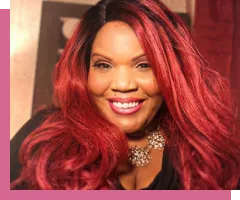
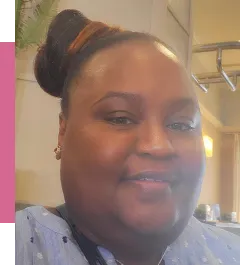
A Breast Cancer Survivor, AfroSHARE Coordinator & Mentor with the Sister 2 Sister mentorship program for Black/Bi-racial women diagnosed with breast cancer. “As an AfroSHARE Ambassador-Coordinator, I feel truly blessed to be able to step into communities and connect with people in such meaningful ways. It’s not just about sharing facts—it’s about offering hope, connection, and light. Each time I share life-saving information, I’m reminded of how powerful knowledge can be. At AfroSHARE, we are creating change one conversation, one heart, and one community at a time.”
– Serrina Goodman
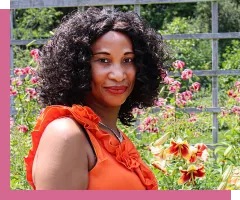
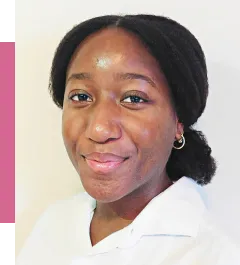
“By sharing information on signs and symptoms, we help people understand the importance of early detection. Each time a community member expresses gratitude for learning something new, it serves as a reminder that these efforts directly contribute to saving lives. Share Cancer Support is not just spreading awareness, it is making a real difference in people’s lives every day.”
– Faith Blidgen
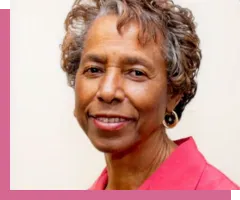
“I’m honored to have been a part of SHARE for over fifteen years. Through SHARE I’ve been able to bring invaluable information to communities that might not otherwise receive it. It also, in many cases, allowed me to connect with a survivor who is happy to speak to someone who understands their journey. It’s my way of giving back.”
– Gwen Harrison
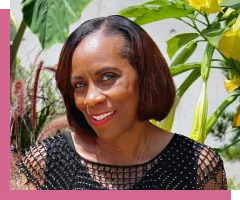
“My cancer journey taught me many things, the most being every experience good or bad comes with lessons and opportunities. What kept me going was knowing I had cancer but cancer NEVER had me. That was my daily motivation. Now I have an opportunity to SHARE with those diagnosed how to find their own lessons and opportunities in their journey.”
– Sharon Browne
Our Team
Director of Black Women's Outreach
Nefa-Tari Moore
“In 2018 I was introduced to SHARE and attended the ovarian cancer support group. I walked away from that meeting feeling full of hope. A few months later, I trained and joined as an Ambassador to do outreach in my community. My background in healthcare and community activism allows me to utilize my skills to support women battling cancer. I am a 3 time cancer survivor, so I am extremely passionate in helping to support the women who have experience with this disease; it’s very important to me”.
– Nefa-Tari
Programs Associate in Diversity & Public Outreach
Osmanée Offré
“Building community and showing up for others amidst present day structures of oppression and inequity are some of my core values, shaping the path that has brought me towards this new role at SHARE. I’m honored to be part of such a dedicated team and excited to use my background in admin, communications and outreach to advance AfroSHARE’s mission bringing support to the Black community”.
– Osmanée
Find the Support You Need

Support line
Speak with a survivor, caregiver, or peer who has faced the same challenges you’re dealing with.

Patient Navigation
Receive personalized guidance and support from our patient navigators to help you through every stage of your treatment.

Sister-2-Sister
Get paired in our mentoring program with a Black or Biracial breast cancer survivor who is at least two years into their survivorship.

Support Groups
Connect with others who have been diagnosed and find strength in shared experiences.

Webinars
Gain insights and expert advice from our live webinars designed to empower and inform you every step of the way.

Clinical Trials
Know your options for treatments in development.

Video Library
Watch our videos for expert guidance and insights on managing the challenges of cancer including the Let’s Talk About It Series for Black women with breast cancer

Educational Materials
2027 Date TBD | VIRTUAL
Empowerment. Community. Impact.
The inaugural 2025 AfroSHARE Summit brought together voices from across the community in a powerful collaboration with the broader SHARE team. What unfolded was more than an event—it became a transformative space for truth-telling, deep listening, shared learning, and collective power.
People facing a diagnosis, caregivers, and those working to reshape cancer care all came together, each playing a vital role in a conversation that resonated far beyond the summit itself. The impact was profound, laying the foundation for lasting connection, change, and continued momentum. Building on this success, we invite you to join the ongoing conversation as we continue to advance understanding, equity, and change together.

Black women have the highest breast cancer mortality rate of any racial or ethnic group in the United States, with a 40% mortality rate. This is 42% higher than the mortality rate for White women. Between 1999 and 2020.

Black women in the United States have a higher rate of cervical cancer mortality than white women, with some studies suggesting that Black women are 75% more likely to die from the disease. In 2018, the mortality rate for Black women was 16.74 per 100,000, compared to 3.06 per 100,000 for white women. When adjusted for hysterectomy, the rate for Black women is 10.1 per 100,000, compared to 4.7 per 100,000 for white women. Black women over 70 are three times more likely to die from cervical cancer than younger women.

Black women have a 41% five-year survival rate for ovarian cancer, compared to 49% for White women. This disparity is true for both early- and late-stage disease, and Black women have not seen the same survival gains as White women over the past several decades. Black women are also more likely to develop resistance to chemotherapy and have higher rates of recurrence than White women. White and Black women are diagnosed with endometrial cancer at similar rates; however Black women are almost twice as likely to die from endometrial cancer.